
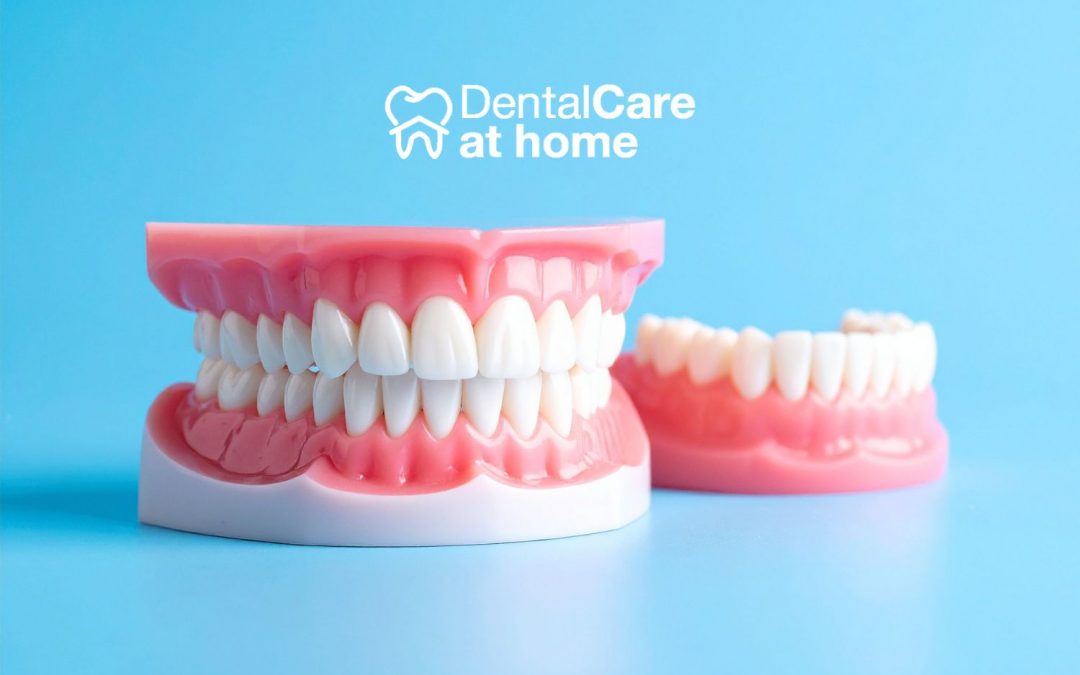
Why Do Dentures Become Loose Over Time?
If your dentures do not feel as secure as they once did you are certainly not alone. It is very common for dentures to become looser over time even if they fitted extremely well when they were first made.
You may notice your dentures moving slightly when you eat or speak. Food may begin getting underneath them or you might find yourself relying more heavily on denture adhesive. In some cases they can start rubbing against the gums and creating uncomfortable or sore areas.
It is easy to assume that this means there is something wrong with the denture itself but often the explanation is more straightforward.
Dentures may stay roughly the same shape but your mouth does not.
Our gums and the bone underneath them can change throughout our lives. As those changes take place the denture that was originally made to fit your mouth may gradually become less secure.
Understanding why this happens and knowing what can be done about it can help you keep your mouth comfortable and your dentures working properly.
Why Does the Fit of a Denture Change?
When natural teeth are removed the bone that previously supported them begins to change.
The roots of natural teeth sit within the jawbone and help maintain its structure. Once those teeth are no longer present the bone can gradually reduce in volume.
The gums sitting over the bone change with it.
This process can continue over many years which means the shape of your mouth today may be different from when your dentures were originally made.
The denture itself may not have changed significantly. It is the surface underneath it that has changed.
Even relatively small changes can affect how securely a denture sits in your mouth.
How Can You Tell If Your Dentures Are Becoming Loose?
Loose dentures are not always immediately obvious.
The changes can happen gradually so you may simply adapt to them without realising how different the fit has become.
One of the first things you might notice is movement while eating.
Foods that were previously easy to manage may become more difficult to chew. You may start avoiding certain foods because you are worried about the denture moving.
Other common signs include:
Dentures moving when you speak
Food collecting underneath the denture
Clicking while eating or talking
Sore or irritated gums
Needing more denture adhesive
Difficulty biting certain foods
Changes in your speech
Feeling less confident when smiling or talking
The denture lifting or moving when you laugh or cough
If you recognise several of these changes it may be worth having the denture assessed.
Why Can Loose Dentures Cause Sore Gums?
A well fitting denture distributes pressure across the tissues supporting it.
When the fit changes the pressure may no longer be distributed evenly.
Instead certain parts of the denture can rub repeatedly against particular areas of the gum.
This can create soreness and irritation.
Some people respond by simply putting up with the discomfort or using more adhesive to try to keep the denture still. This may provide temporary relief but it does not necessarily address the underlying problem.
Persistent sore areas should be checked.
If an ulcer or other change inside your mouth does not heal it is particularly important to seek professional advice rather than assuming the denture is responsible.
Can Loose Dentures Affect Eating?
Yes.
Your dentures play an important role in helping you bite and chew food. If they move while you are eating it can become more difficult to break food down comfortably.
You might start eating more slowly or cutting food into increasingly small pieces.
Some people begin avoiding foods they previously enjoyed because they are worried their dentures will move.
This is particularly important for older people.
Maintaining a varied and nutritious diet is important throughout life. A poorly fitting denture should not be allowed to unnecessarily restrict what somebody eats.
If eating has become difficult it is worth having the denture checked rather than simply changing your entire diet to accommodate it.
Can Loose Dentures Affect Speech?
Dentures can also play an important role in speech.
Your tongue interacts with your teeth and dentures when forming certain sounds. If the position of a denture changes unexpectedly while you are speaking it can affect pronunciation.
You might also become more conscious of the possibility of the denture moving during a conversation.
That can affect confidence even when other people have not noticed anything.
A denture should allow you to speak comfortably without constantly worrying about whether it will remain in position.
Does Denture Adhesive Solve the Problem?
Denture adhesive can be useful for some people and can provide additional confidence and stability.
However it should not automatically be treated as the solution to an increasingly loose denture.
If you previously needed very little or no adhesive and now find yourself using larger amounts every day there may have been a change in the fit.
Adding more adhesive may temporarily disguise that change but it does not alter the shape of the denture or the gums underneath it.
Think of adhesive as something that can help a suitable denture remain secure rather than something designed to repair a denture that no longer fits properly.
If you are unsure how much adhesive you should be using ask a dental professional for advice.
What Is a Denture Reline?
In some situations a denture can be relined.
A reline involves modifying the fitting surface of the denture so that it corresponds more closely with the current shape of your mouth.
Rather than replacing the entire denture additional material is used to improve the fit against the gums.
Whether this is appropriate depends on several factors including the condition of the existing denture and how much your mouth has changed.
A reline is not suitable in every situation.
If the denture is badly worn damaged or no longer provides an appropriate bite then replacing it may be a better option.
A dental professional can assess the denture and advise which approach is most appropriate.
When Might You Need New Dentures?
Dentures do not necessarily need replacing simply because they are a certain age.
Some people can comfortably use the same denture for many years while others experience significant changes to their mouth over a shorter period.
The condition and fit are more important than simply counting how many years you have had them.
Replacement may be worth considering if:
The denture has become significantly loose
It repeatedly breaks
The denture teeth are badly worn
You experience persistent discomfort
Your bite has changed
Eating has become difficult
A reline would not adequately correct the fit
The denture has become damaged beyond a sensible repair
If you are unsure an assessment can help establish whether your existing denture can be adjusted or repaired.
Why Do Dentures Sometimes Break When They Become Loose?
A change in fit can sometimes contribute to denture damage.
When a denture fits correctly the forces created when you bite and chew are distributed more evenly.
If the denture becomes unstable pressure may be concentrated in particular areas.
Over time this can place additional stress on the denture.
A crack may appear or the denture may eventually break.
This is one reason why repeated denture repairs should not always be viewed as completely separate incidents.
If the same denture continues to break there may be an underlying issue with its fit that needs to be investigated.
Can Weight Loss Affect Denture Fit?
Significant changes to your body can sometimes be accompanied by changes within the mouth.
Weight loss illness and other changes in general health may contribute to differences in how a denture feels.
If your denture suddenly becomes noticeably loose rather than changing gradually over several years it is worth mentioning this when seeking advice.
The denture itself may only be one part of the picture.
What About Lower Dentures?
Lower dentures can sometimes be particularly challenging.
An upper full denture has a relatively large surface area across the roof of the mouth which can help with retention.
A lower denture has less available space and must also work around the movement of the tongue.
Changes to the supporting tissues can therefore make stability more difficult.
This does not mean that you simply have to accept a lower denture that constantly moves.
There may be ways to improve the fit or alternative treatment options may be worth discussing depending on your individual circumstances.
Looking After Your Dentures
Good daily care will not prevent the natural changes that happen to your gums and jaw but it can help keep your dentures in good condition.
Clean them every day using an appropriate denture cleaning method.
Handle them carefully because dentures can break if dropped onto a hard surface.
Cleaning them over a bowl of water or folded towel can help reduce the chance of accidental damage.
Your mouth also needs attention.
Any remaining natural teeth should continue to be brushed thoroughly and your gums tongue and other oral tissues should be kept clean.
Unless you have been advised otherwise dentures should generally be removed overnight to give the tissues underneath them an opportunity to rest.
Do Not Adjust Dentures Yourself
A loose denture can be frustrating but trying to reshape it yourself can cause permanent damage.
Avoid filing or cutting parts of the denture to try to improve comfort.
You should also avoid attempting to permanently alter the fit using household materials.
Dentures are made to work with the shape of your mouth and your bite. Small changes that appear harmless can have unexpected effects on how the denture functions.
If something needs adjusting it is safer to have it assessed professionally.
When Should You Get Your Dentures Checked?
You do not need to wait until your denture breaks or becomes impossible to wear before asking for help.
Arrange an assessment if your dentures are becoming increasingly loose uncomfortable or difficult to use.
You should also seek advice if you notice:
Persistent ulcers or sore areas
Unexplained lumps
Red or white patches
Bleeding
Swelling
Ongoing pain
Changes that do not heal
These symptoms should not automatically be attributed to your dentures.
Regular oral health checks remain important even if you no longer have any natural teeth.
What If You Cannot Easily Visit a Dentist?
For somebody who is housebound or has limited mobility getting to a traditional dental practice can be difficult.
This can mean denture problems are sometimes tolerated for much longer than they should be.
Depending on where you live domiciliary dental services may be available for people who cannot easily access a practice.
Some denture services can also be provided without repeatedly travelling to a dental surgery.
The important thing is not to assume that nothing can be done simply because attending a traditional appointment is difficult.
Your Dentures Should Feel Comfortable
A denture becoming loose does not necessarily mean that it was badly made or that you have done something wrong.
Our mouths change.
A denture that was created to fit your mouth several years ago may simply no longer match its current shape as closely as it once did.
What matters is recognising when that change begins to affect your comfort eating speech or confidence.
Sometimes an adjustment or reline may help. In other circumstances a new denture may be the better long term solution.
Increasing amounts of adhesive and learning to tolerate discomfort should not be the only answer.
Dentures are there to help you eat speak and live comfortably. If yours no longer do that it is worth finding out why.